Increasing efficiency and safety in vehicle testing through AI

Vehicle testing

Thanks to our many years of experience testing components, vehicles, and platforms, we know that as vehicles have become more complex, so too have the demands placed on vehicle testing and test drivers. Test drivers face the challenge of documenting issues in as much detail as possible during test drives, completing the drives in a timely manner, and—of course—arriving safely at their destination.

Our AI-powered co-pilot ensures high-quality, real-time information exchange without any data loss. The driver exchanges relevant information with the AI through natural dialogue: driving maneuvers are guided and documented; during the test drive, anomalies are recorded, details are logged along a fault tree, and the data is documented in real time within the test systems.

Our AI-powered co-pilot significantly improves data quality while reducing the driver’s workload and thereby enhancing safety, all while increasing processing speed and lowering costs.

Relieving employees

Medical practices

“We receive hundreds of calls a day, and especially during these extraordinary times, the support provided by SUSI is invaluable. She offers us significant added value.” Our digital assistant, SUSI, handles incoming calls at Dr. Eckermann and Bauer’s medical practice. She records the concerns of callers and prepares the information for the staff.

“This AI solution takes some of the load off our staff, and our practice is always available to callers. That gives us a great sense of satisfaction.”

AI-powered passengers

Vehicle testing

Thanks to our many years of experience testing components, vehicles, and platforms, we know that as vehicles have become more complex, so too have the demands placed on vehicle testing and test drivers. Test drivers face the challenge of documenting issues in as much detail as possible during test drives, completing the drives in a timely manner, and—of course—arriving safely at their destination.

Our AI-powered co-pilots ensure high-quality, real-time information exchange without any data loss. The driver exchanges relevant information with the AI through natural dialogue: driving maneuvers are guided and documented; during the test drive, anomalies are recorded, details are logged along a fault tree, and the data is documented in real time within the test systems.

Our AI-powered co-pilots significantly improve data quality while reducing the workload on drivers and thereby enhancing safety, all while increasing process speed and reducing costs.

Chat FAQ System

TotalEnergies

Together with TotalEnergies, we have developed the apprenticing, digital employee "Elodie", which offers special customer service. It answers questions about products and services via chat, serves as a navigation aid on the website and accepts feedback from our customers. Elodie is constantly learning and is available around the clock.

Minimize processing times

Legal representation

The volume of calls at law firms exceeds the availability of administrative staff. A particular challenge is that call volume is subject to cyclical fluctuations. As a result, many calls go unanswered during peak times. Without the SUSI, the Digital Assistant Secretaries had to take down the callers’ requests during time-consuming conversations and forward them in brief notes to the appropriate legal representative for processing.

Since the partnership began, SUSI has been assisting the secretariat staff. It handles all calls that the secretariat team cannot process. During the call, the caller states the reason for the call, and the AI classifies the issue. Depending on the identified issue, SUSI either asks specific follow-up questions or answers the caller’s question immediately.

It then sends a summary, including the requested case numbers, to the relevant department or directly to the legal representative in question. SUSI also informs the caller which documents can be sent to the law firm in advance. This reduces the number of follow-up calls and minimizes processing time.

Research Project: "Language-Based Human-Machine Interfaces"

In collaboration with the University of Stuttgart and the Fraunhofer Institute, we are developing voice-based human-machine interfaces that capture user and contextual information while driving. Using our technology, our voice assistant supports the researcher in the car and interacts with the drivers. In a subsequent phase, the AI system will be used for emotion recognition. This capability is expected to significantly enhance the in-vehicle user experience.

Research Project “Age-Appropriate Behavior”

We are collaborating with Continental to explore the concept of “level-appropriate behavior.” Identifying and monitoring safety-critical situations poses challenges for drivers, especially when there are frequent transitions between fully automated, partially automated, and manual driving.

The goal is to clearly show drivers which level of automation they are currently in and how they should respond. To this end, we are developing a virtual co-pilot that explains the test scenario, answers questions, and is available throughout the drive. Our AI provides support, particularly when switching between autonomous driving levels. 

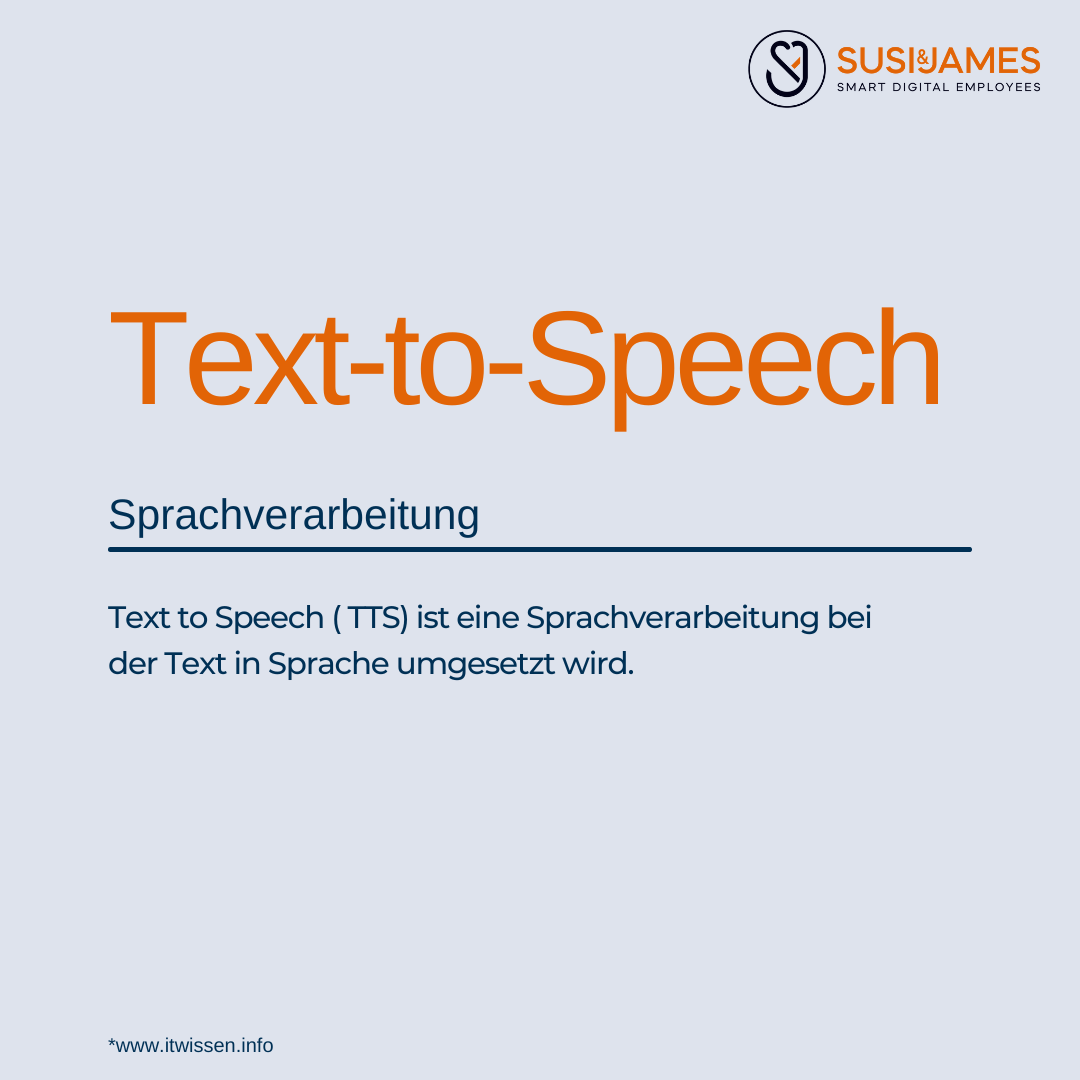
Text-to-Speech

Speech synthesis involves artificially generating human speech and using it for communicative purposes. Speech synthesis enables human-machine communication. Technically speaking, speech synthesis involves the conversion and output of encoded data in the form of speech, whereby speech synthesis systems store and phonetically classify corresponding words or word fragments. Two methods are used in speech synthesis: the use of previously recorded natural speech in the form of phonemes, words, and sentence fragments, and the generation of synthetic speech from data and text, whereby the first method can be used with a limited vocabulary, while synthetic generation works with an unlimited vocabulary. Such speech synthesis systems are used in computer-telephony integration (CTI), screen readers, text-to-speech, …

Speech-to-text

Speech recognition refers to the ability of a machine or program to recognize spoken words and sentences and convert them into a machine-readable format.
Voice recognition is used, for example, in call forwarding, voice dialing, and voice search. Voice recognition should be distinguished from voice identification, which is a biometric method of identifying a person based on their voice.

WordPress Cookie Notice by Real Cookie Banner